Missing is not zero: protect journal totals from silent assumptions
A recorded zero means a quantity was measured or reported as zero under a defined convention.
Distinguish an observed zero from an unknown
A recorded zero means a quantity was measured or reported as zero under a defined convention. An empty field means the value may be unavailable, inapplicable or not yet entered. Replacing every blank with zero can make a dataset look complete while changing its totals and averages. Define what each field permits before importing records.
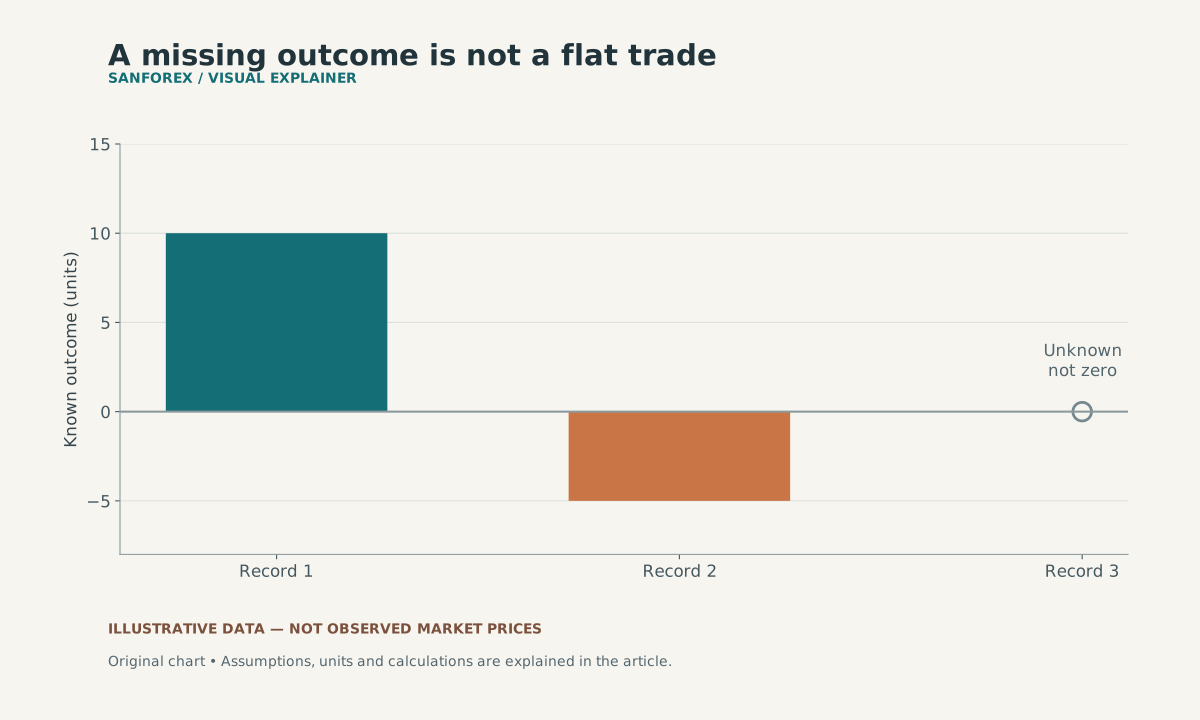
Two recorded outcomes are +10 and -5; the hollow marker flags an unavailable third value rather than a measured zero. Known subtotal is +5 over two records, not a complete three-record total.
Open full-size diagram ↗Compare two treatments of the same rows
Suppose three rows have outcomes of 10, minus 5 and missing. The known subtotal is 5 across two known outcomes, and their mean is 2.5. If the blank is replaced with zero, the mean becomes 5 / 3, approximately 1.67. Neither calculation establishes the true mean of all three outcomes because the third result remains unknown.
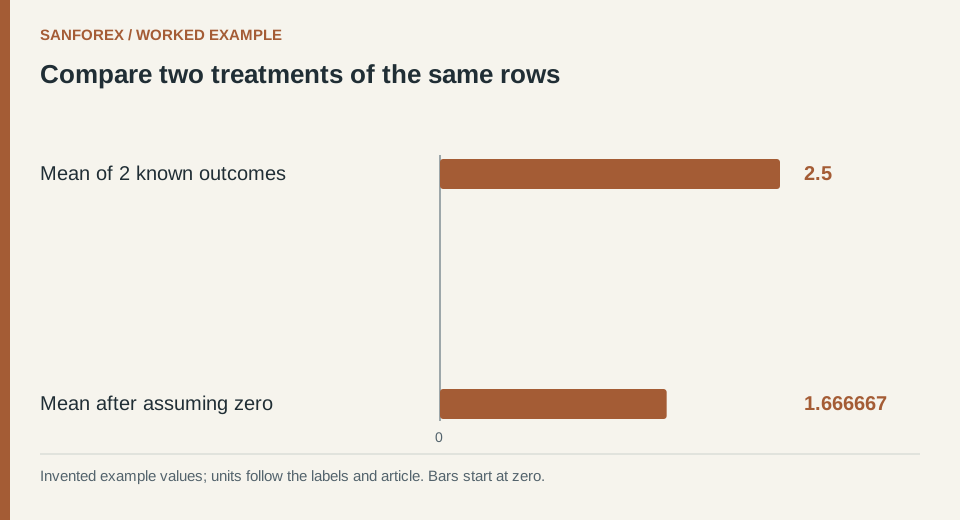
Worked example: Mean of 2 known outcomes: 2.5; Mean after assuming zero: 1.66667. Invented values; units follow the row labels and article.
Open full-size diagram ↗Keep counts beside money totals
A report can truthfully state that two valid outcomes sum to 5 and one outcome is missing. It should not present that subtotal as a complete account result. For fees, a documented zero fee is different from a charge not supplied by the export. Decide whether an incomplete record is excluded, blocked or displayed with a warning, and expose that decision in the report.
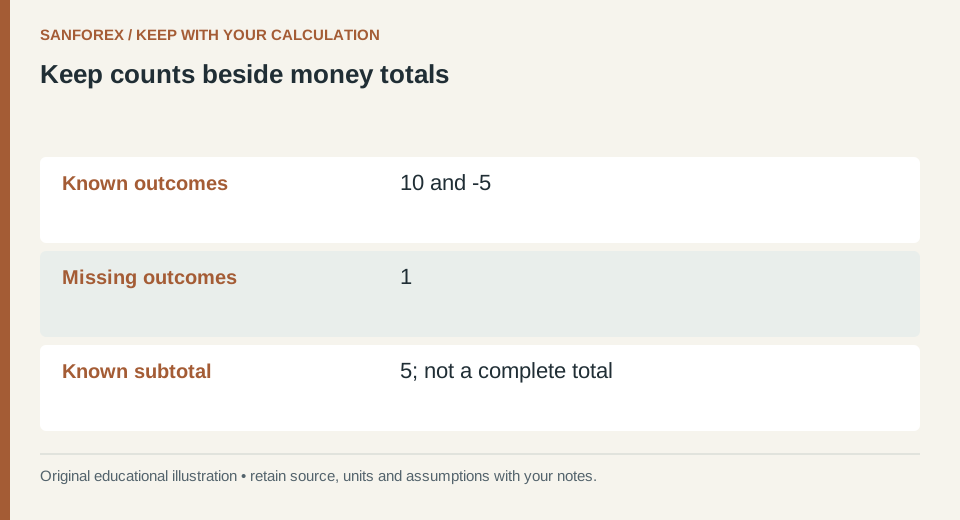
Calculation checklist: Known outcomes: 10 and -5; Missing outcomes: 1; Known subtotal: 5; not a complete total. Preserve these definitions when reproducing the example.
Open full-size diagram ↗Resolve the gap at its source
Inspect the broker statement or original record instead of filling the blank with a convenient number. Preserve the original missing marker and note any later correction. Recompute counts and totals after the value arrives. This policy also helps distinguish a legitimately flat trade from an incomplete calculation or a formula that returned an empty string.
Sources and conventions
Examples are hypothetical. Worked examples state their formulas and assumptions in the article; our methodology explains the related calculators. Broker contract specifications determine actual lot, margin and execution conditions. These sources document definitions and data; a source link does not imply endorsement of SanForex or a trading service.
These materials are prepared with AI assistance and checked against worked examples and deterministic calculation tests where applicable. They are not an expert suitability assessment or investment advice.
Open trade csv checker tool ↗