Simple and compound interest: make the frequency explicit
Simple interest applies the rate to the original principal.
Specify the model before comparing rates
Simple interest applies the rate to the original principal. Compounding allows prior interest to enter the base for later periods. The Texas State Securities Board explains this distinction. A quoted annual rate is incomplete for a detailed calculation unless the compounding convention and relevant terms are also known.
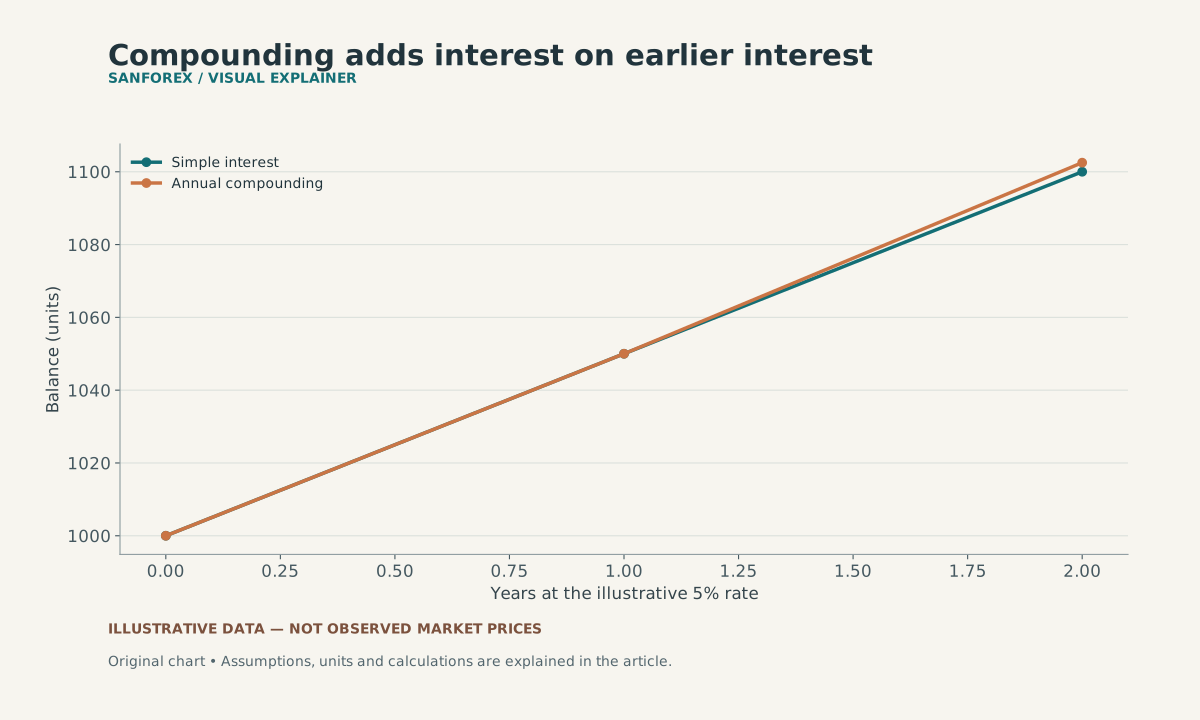
At a constant hypothetical 5% annual rate, 1,000 becomes 1,100 under simple interest or 1,102.50 under annual compounding after two years. No fees, taxes or cash flows are included.
Open full-size diagram ↗Compare hypothetical two-year balances
For an invented principal of 1,000 and rate of 5% per year, simple interest over two years is 100, giving 1,100. Annual compounding gives 1,000 × 1.05 × 1.05 = 1,102.50. The 2.50 difference is interest on the first year’s 50. These figures assume a constant rate, no withdrawals, no fees and no taxes; they are not a product quote.
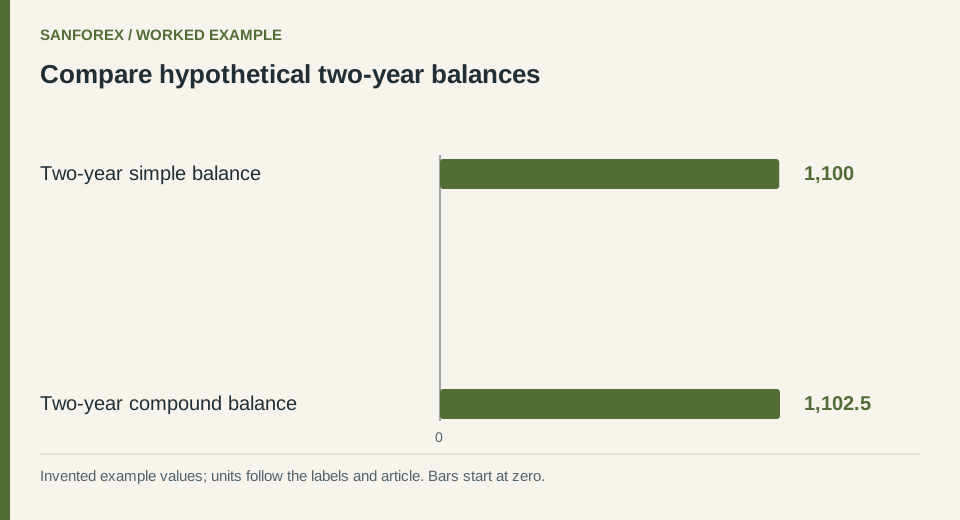
Worked example: Two-year simple balance: 1100; Two-year compound balance: 1102.5. Invented values; units follow the row labels and article.
Open full-size diagram ↗Do not confuse nominal and effective annual rates
If an illustrative nominal annual rate of 12% is compounded monthly at 1%, its annual factor is 1.01 to the twelfth power, approximately 1.126825. The effective increase is about 12.6825%, not 12%. A daily-accrual product may use a different day-count convention; do not substitute this monthly example.
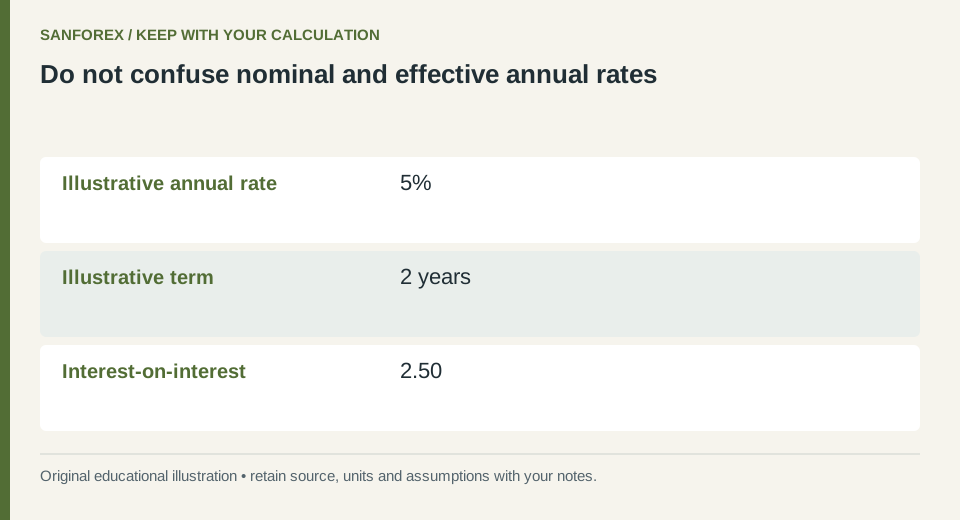
Calculation checklist: Illustrative annual rate: 5%; Illustrative term: 2 years; Interest-on-interest: 2.50. Preserve these definitions when reproducing the example.
Open full-size diagram ↗Write a complete comparison
Record principal, rate type, accrual interval, compounding interval, term and excluded charges. Variable rates require a period-by-period calculation. Currency conversion is separate from interest growth, and SanForex does not quote deposit products or calculate their contractual yield. Verify actual terms before using a modeled amount for a payment decision.
Sources and conventions
Examples are hypothetical. Worked examples state their formulas and assumptions in the article; our methodology explains the related calculators. Broker contract specifications determine actual lot, margin and execution conditions. These sources document definitions and data; a source link does not imply endorsement of SanForex or a trading service.
These materials are prepared with AI assistance and checked against worked examples and deterministic calculation tests where applicable. They are not an expert suitability assessment or investment advice.
Open currency converter tool ↗