Keep simulated and live results in separate journal ledgers
A simulated result and a live execution are different forms of evidence.
Record where every outcome came from
A simulated result and a live execution are different forms of evidence. A simulation applies assumptions to data, while a live record describes an actual execution subject to its recorded costs and conditions. Mixing the two in one headline performance total obscures that distinction. Give each record an explicit environment field rather than relying on a note readers might overlook.
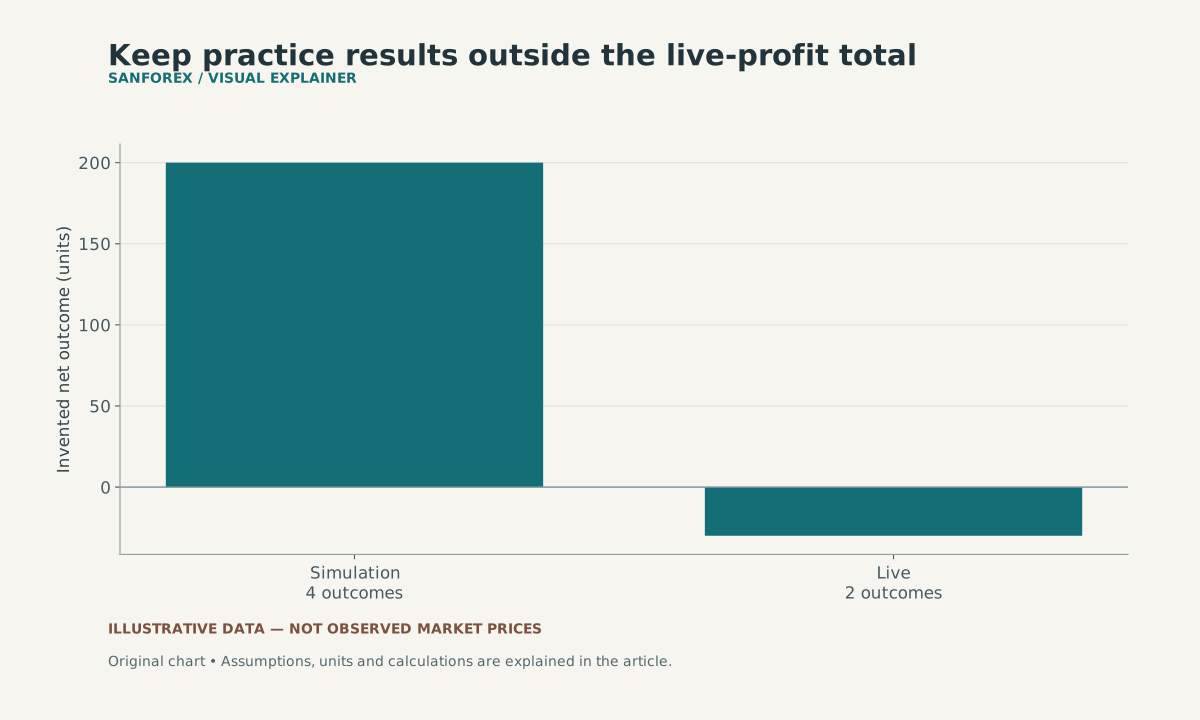
The hypothetical practice ledger totals +200 and the separate live ledger -30. Both figures here are invented teaching data; combining them into +170 would not describe live profit.
Open full-size diagram ↗See how a combined total misleads
Suppose an invented practice ledger contains four simulated outcomes totaling plus 200. A separate live ledger contains two outcomes totaling minus 30. The combined arithmetic total is plus 170, but it is not live profit. The meaningful summary preserves both counts and totals: simulation 4 and plus 200; live 2 and minus 30.
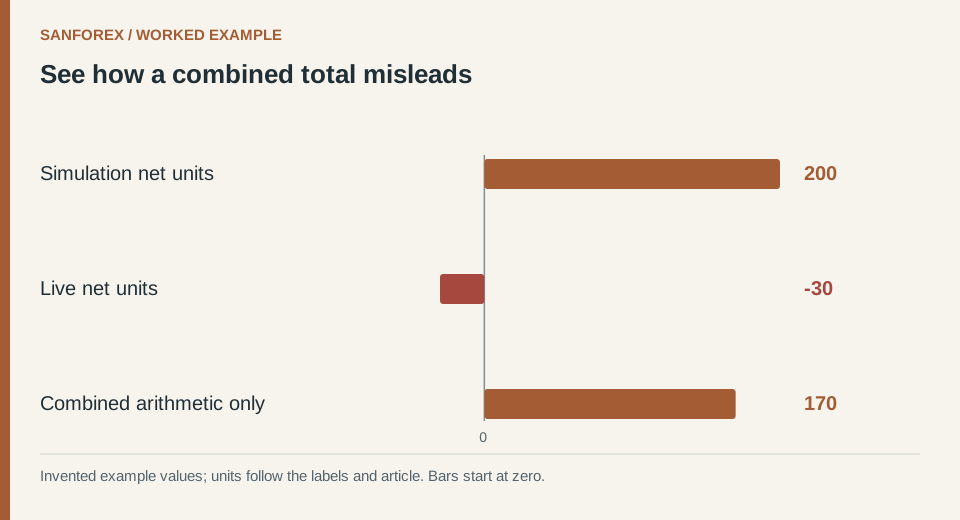
Worked example: Simulation net units: 200; Live net units: -30; Combined arithmetic only: 170. Invented values; units follow the row labels and article.
Open full-size diagram ↗Retain simulation assumptions with the records
For practice and backtests, store the data interval, execution assumptions, cost model and version of the rules. For live records, retain the execution source and actual charges. Do not label a replay exercise as an executed order. If a simulated model is revised, give the new run an identifier so the same historical opportunity is not counted repeatedly as independent evidence.
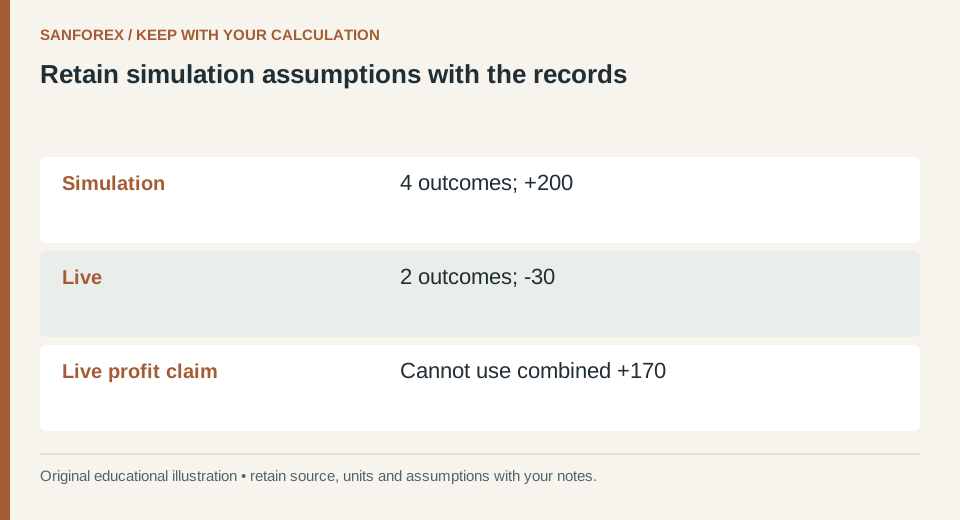
Calculation checklist: Simulation: 4 outcomes; +200; Live: 2 outcomes; -30; Live profit claim: Cannot use combined +170. Preserve these definitions when reproducing the example.
Open full-size diagram ↗Compare processes without blending claims
Separate ledgers can still support a useful review of differences in fill assumptions, costs or decision timing. Use comparable periods and definitions, and display sample sizes. A favorable practice result is not money received and does not guarantee live performance. Keep any public summary precise about which environment produced the numbers and whether the result is gross or net of costs.
Sources and conventions
Examples are hypothetical. Worked examples state their formulas and assumptions in the article; our methodology explains the related calculators. Broker contract specifications determine actual lot, margin and execution conditions. These sources document definitions and data; a source link does not imply endorsement of SanForex or a trading service.
These materials are prepared with AI assistance and checked against worked examples and deterministic calculation tests where applicable. They are not an expert suitability assessment or investment advice.
Open trading journal tool ↗